
Why Citizen-Led Democracy Keeps Failing And the One Country That Proved It Doesn’t Have To

Part 1 of 2 | IOD Nations Global Democracy Series
The Pattern No One Wants to Name
The story always begins the same way.
Citizens get angry. Governments look corrupt, incompetent, or both. A movement rises. Activists demand that the people be allowed to shape their own future. A process is designed a Citizens’ Assembly, a Constitutional Convention, a referendum, a digital consultation. People participate in extraordinary numbers. Recommendations are produced. Votes are cast. The “Yes” side wins.
And then the politicians step in.
They water down the language. They stall in committee. They demand two votes where one was agreed. They use legal technicalities to declare the result “non-binding.” They take the mandate the people gave them and fold it into the existing system until it is unrecognizable or simply disappear it altogether.
This is not a coincidence. This is the architecture of elite self-preservation dressed in democratic language.
The world is littered with the wreckage of citizen-led democratic processes that succeeded in every popular sense and failed in every institutional one. Ireland. Iceland. Chile. Bangladesh. France. The list is long, and it is growing.
And then there is Taiwan.
Taiwan did it differently. Taiwan actually made it work. And understanding why is not an academic exercise it is a survival manual for every democracy movement on earth right now.
Ireland: When Politicians Rewrote the People’s Homework
Ireland became the world’s most celebrated example of deliberative democracy. Between 2012 and 2024, the country held five consecutive Citizens’ Assemblies randomly selected panels of 99 ordinary citizens tasked with deliberating on the most contested issues in Irish society. Two of those processes delivered historic results: a 2015 referendum that legalized same-sex marriage and a 2018 referendum that repealed the constitutional ban on abortion.
The Irish model was celebrated globally. It proved that ordinary people not lobbyists, not party machines, not constitutional lawyers could deliberate on explosive issues and produce workable, broadly supported recommendations. As Professor David Farrell of University College Dublin observed, participants “parked their anger at the door” and did the hard work of finding common ground.
But the Irish story is not simply a success story. It is a cautionary tale that contains a fatal flaw and that flaw surfaced catastrophically in March 2024.
March 8, 2024: International Women’s Day. Two Amendments. Two Humiliations.
In 2021, Ireland’s Citizens’ Assembly on Gender Equality made a clear recommendation: remove the outdated 1937 constitutional language about women’s “life within the home” and replace it with a provision that obliged the state not merely encouraged it to support caregiving.
The government listened. Then it rewrote the homework.
In March 2024, Prime Minister Leo Varadkar held two constitutional referendums on International Women’s Day. The first asked voters to expand the definition of “family” beyond marriage to include “durable relationships” a vague, legally undefined phrase that had replaced the Assembly’s cleaner recommendation. The second asked the government to “strive” to support carers in the home, rather than be obliged to a direct weakening of what the Assembly had agreed. It also dropped any reference to care outside the home, cutting out disability groups and carers entirely.
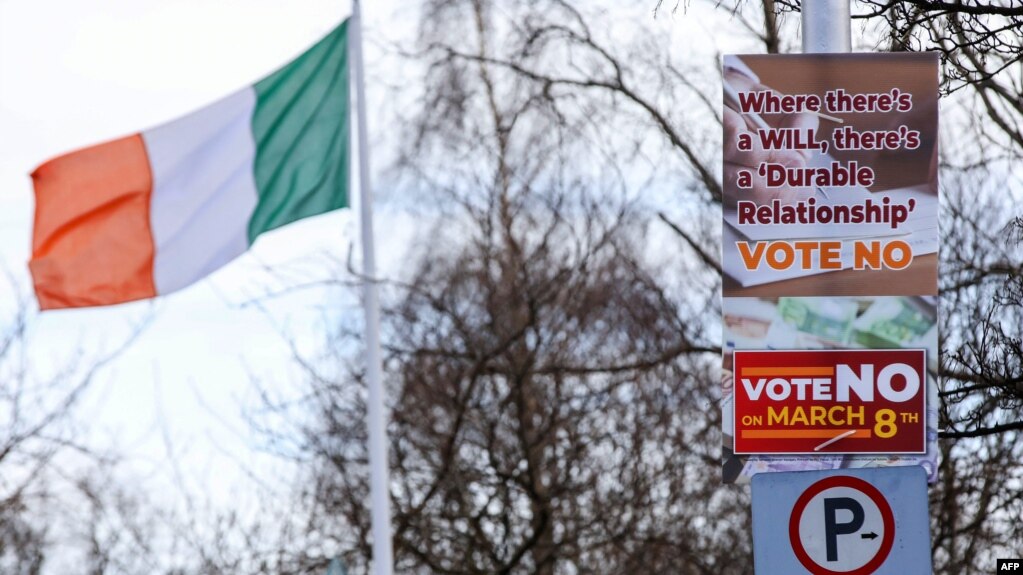
The result was a democratic humiliation of historic proportions. The family amendment was rejected by 67.7% of voters. The care amendment was rejected by 73.9%. Turnout fell below 44%. All 39 constituencies voted No on care. Only one voted Yes on family.
Sinn Féin leader Mary Lou McDonald delivered the verdict that should be engraved above every parliament door in the world:
There is little point in having a Citizens’ Assembly if the government are then going to ignore the outcome.
The Sortition Foundation put it with clinical precision: the government had “watered down recommendations made by Ireland’s citizens’ assembly,” and in doing so had “destroyed goodwill by disregarding the hard work of assembly members who participated in deliberations.” Political scientist Eoin O’Malley called it simply “a poorly executed referendum that nobody needed or wanted” one that was “politically designed to secure a liberal legacy” for a departing Prime Minister.
The Real Lesson From Ireland
Ireland did not fail because citizen deliberation doesn’t work. It succeeded magnificently when governments honored the process 2015 and 2018 proved that. Ireland failed in 2024 because there was no binding mechanism forcing politicians to implement what citizens recommended. The Assembly’s work was advisory. The government held the pen. And when electoral calculations overrode democratic obligations, the people paid the price.
The gap between what citizens decide and what politicians implement is not a bug. It is a feature of the current system one that will keep producing this outcome until the mechanism itself changes.
Iceland: The Crowdsourced Constitution That Politicians Buried Alive
Ireland’s failure in 2024 was slow and bureaucratic. Iceland’s failure was more dramatic and more revealing.
After the catastrophic banking collapse of 2008 one of the largest per-capita banking crashes in history Icelanders didn’t just protest. They built something. Faced with pots-and-pans-banging crowds in Parliament Square, the government set in motion a genuine people’s constitution process. A National Forum of 950 randomly selected citizens was convened. Their values and principles were catalogued. A 25-member Constitutional Council was elected not appointed to draft a new constitution in full public view, posting draft chapters on Facebook and receiving 3,600 public comments and 360 formal suggestions.
The result was the world’s first crowdsourced constitution a genuinely radical document that, among other things, enshrined a constitutional right to the internet, declared natural resources as national property, and embedded environmental protections that no existing Icelandic law had dared touch.
In October 2012, two-thirds of Icelandic voters approved the document as the basis for a new constitution. The people had spoken. The mandate was overwhelming and unambiguous.
What Happened Next Was Political Sabotage
The two main opposition parties the Independence Party and the Progressive Party deployed filibuster after filibuster. They held Parliament hostage for days and weeks. One pro-constitution MP compared her experience to “trying to file her income tax return with monkeys at the kitchen table.” The coalition government, though holding the votes to force the bill through, lost its nerve.
In spring 2013, the bill was killed. To add insult to injury, the outgoing parliament quietly inserted a new rule requiring a 2/3 parliamentary majority plus 40% popular support to pass any constitutional change going forward effectively making the document the people had just approved nearly impossible to ever implement.
The Independence Party subsequently won elections and held power through multiple terms. Business elites, threatened by the natural resources provisions, had bankrolled the opposition. The constitution that Icelanders had written together the one two-thirds of them voted to adopt gathered dust for over a decade.
Why Iceland Failed
Three structural failures converged:
First, the popular referendum was non-binding. Politicians were never legally required to act on it. The people’s voice was consultative not sovereign.
Second, political parties had been excluded from the drafting process to prevent capture but this backfired. With no political ownership of the document, no party felt obligated to deliver it. The constitution had popular legitimacy but zero institutional momentum.
Third, powerful economic interests specifically the fishing industry and financial sector threatened by the natural resources clauses mobilized against it. As one analysis noted, the document was considered too radical by those who benefited most from the status quo.
The lesson is brutal: You can crowdsource a constitution. You can get two-thirds of your country to vote for it. And powerful interests can still kill it if the mechanism gives them the legal room to do so.
Bangladesh: The Revolution That Won the Vote and Lost the Government
Bangladesh’s story is the freshest wound and possibly the most instructive for our time.
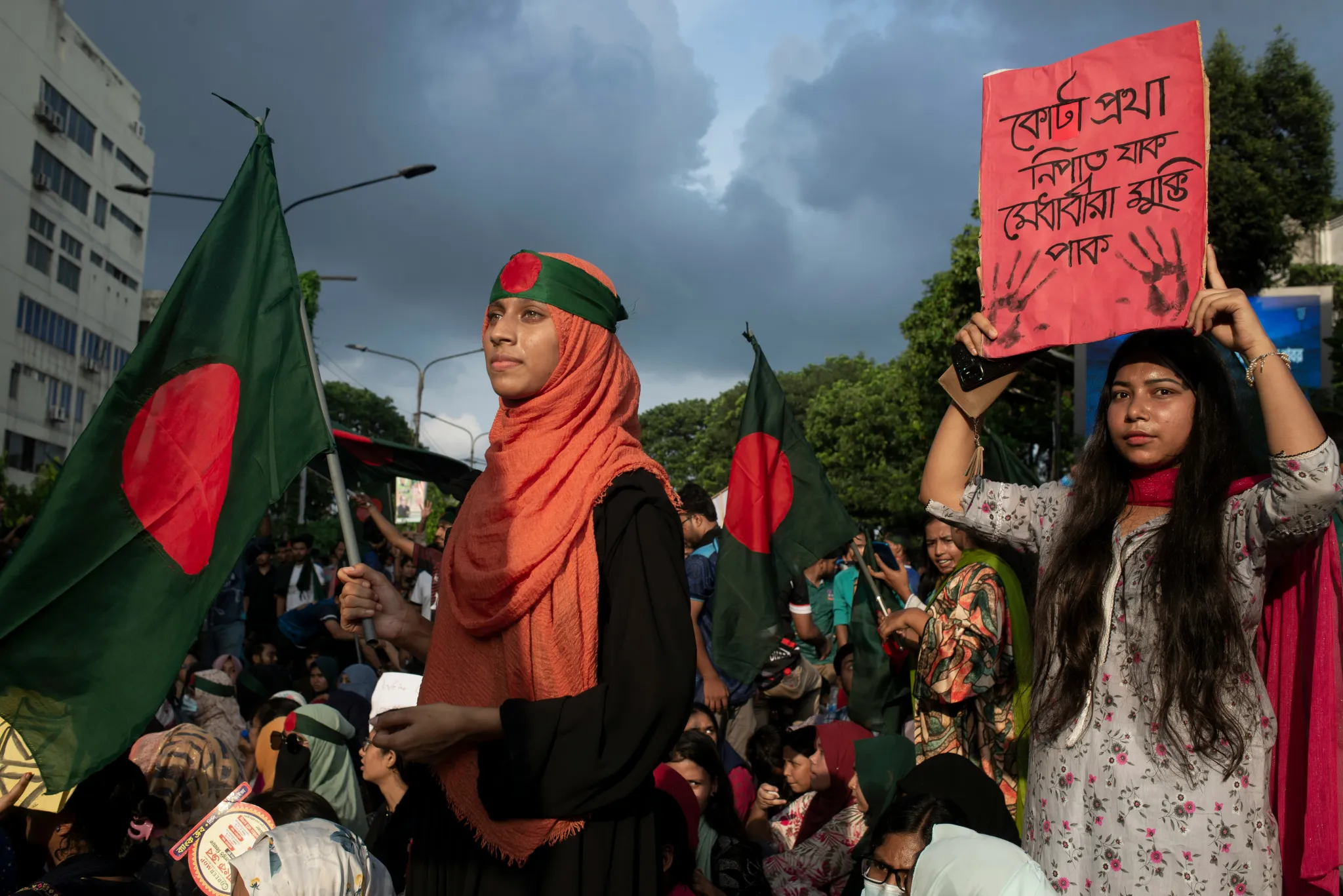
In July and August of 2024, Generation Z took to the streets in what became known as the July Revolution a mass uprising against 16 years of authoritarian rule under Prime Minister Sheikh Hasina and the Awami League. Students, young workers, and activists flooded the streets demanding accountability, democratic reform, and an end to political oppression. The movement succeeded: Hasina fled the country. Nobel laureate Muhammad Yunus was appointed interim Chief Adviser on August 8, 2024, fulfilling a core protester demand.
What followed was something genuinely historic: an 18-month reform process led by the interim government, producing a July National Charter containing over 80 reform proposals covering the constitution, judiciary, electoral system, police, public administration, and anti-corruption mechanisms. Key provisions included prime ministerial term limits, judicial independence, a bicameral parliament, women’s representation, and the restoration of caretaker-government safeguards.
February 12, 2026: The Vote
On February 12, 2026, Bangladesh held a parliamentary election and a constitutional referendum simultaneously — the first time in the country’s history, and the first with diaspora voting. Citizens received a pink ballot alongside their white parliamentary ballot, asking a simple Yes/No on four consolidated reform packages.
The result: 68.59% voted Yes on a 60% turnout. More than 127 million registered voters. The mandate was unambiguous.
The Bangladesh Nationalist Party (BNP) won the parliamentary election with a two-thirds supermajority. Before the election, BNP leaders had publicly campaigned for a Yes vote. The reform was supposed to happen. The mandate existed. The votes had been cast.
The Betrayal
Within hours of the new parliament’s first oath-taking, the reform roadmap began to unravel.
Newly elected MPs were supposed to take two oaths simultaneously: one as Members of Parliament, and one as members of a Constitutional Reform Council tasked with implementing the charter within 180 working days. Opposition party and their allies took both oaths. BNP members took only one. They refused to take the second oath effectively refusing to constitute the Reform Council that the referendum had empowered.
As The Diplomat reported in April 2026: “Despite a clear ‘yes’ vote in the referendum, the BNP government is dragging its feet, prompting the opposition to protest in parliament and the streets.”
The BNP’s argument was technical: the Reform Council lacked formal constitutional status, and any changes must proceed through standard parliamentary procedure. Translation: we will implement the reforms we like, on our timeline, without the binding structure that voters approved.
Opposition parties refused to accept this and have been rallying in parliament and on the streets since April 2026, demanding the referendum mandate be honored. Meanwhile, 133 ordinances from the interim government covering judicial independence, anti-corruption, forced disappearance accountability, and human rights await parliamentary decisions that may never come.
The Pattern, Again
Bangladesh’s Generation Z toppled a government. Drafted a charter. Ran a referendum. Won with 68% of the vote. And the newly elected government the one that campaigned on Yes is now using parliamentary supremacy arguments to neutralize what citizens approved.
As The Daily Star’s editorial board warned: “To treat that demand as optional parliamentary discretion is to turn popular consent into a blank cheque for the next supermajority. That is precisely the logic that has repeatedly converted constitutional amendments into instruments of partisan entrenchment.”
Chile: Two Referendums. Two Rejections. One Exhausted Democracy.
Chile’s constitutional saga may be the most complete case study in what happens when democratic energy is funneled through a process that is not designed to build consensus.
In 2019, massive street protests against inequality erupted across Chile one of Latin America’s most economically stable countries, yet one operating under a constitution written in 1980 under the dictatorship of Augusto Pinochet. The protests were the trigger. In 2020, 78% of Chileans voted to convene a constitutional convention and write a new one.
The First Failure: Too Far Left
The convention that drafted the new constitution was historic: gender-balanced, with designated seats for Indigenous representatives, and dominated by left-wing political outsiders with little experience in the mechanics of lawmaking. The resulting document ran to 388 articles sprawling, complex, and containing provisions that large segments of the population found alarming, confusing, or both.
On September 4, 2022, 62% of Chileans rejected it. The assembly had opted for maximalist positions rather than building the broadest possible coalition. As one assembly member later reflected, the Frente Amplio “lacked leadership” in failing to reach across the aisle. The public which had voted overwhelmingly to have a new constitution was not prepared for the document that arrived.
The Second Failure: Too Far Right
Chile tried again. A second convention was convened, this time with a right-wing majority. The second draft swung hard in the other direction anti-abortion language, less environmental protection, a document that many saw as a vehicle for conservative rollback. In December 2023, 55% of Chileans rejected that document too.
As analysts at Americas Quarterly concluded: the rejection of a draft deemed too far right in 2023 and too far left in 2022 exposed “an electorate that is more moderate than the two elected constituent bodies.” The people wanted something neither the left nor the right was capable of producing because neither process was structured around finding genuine common ground.
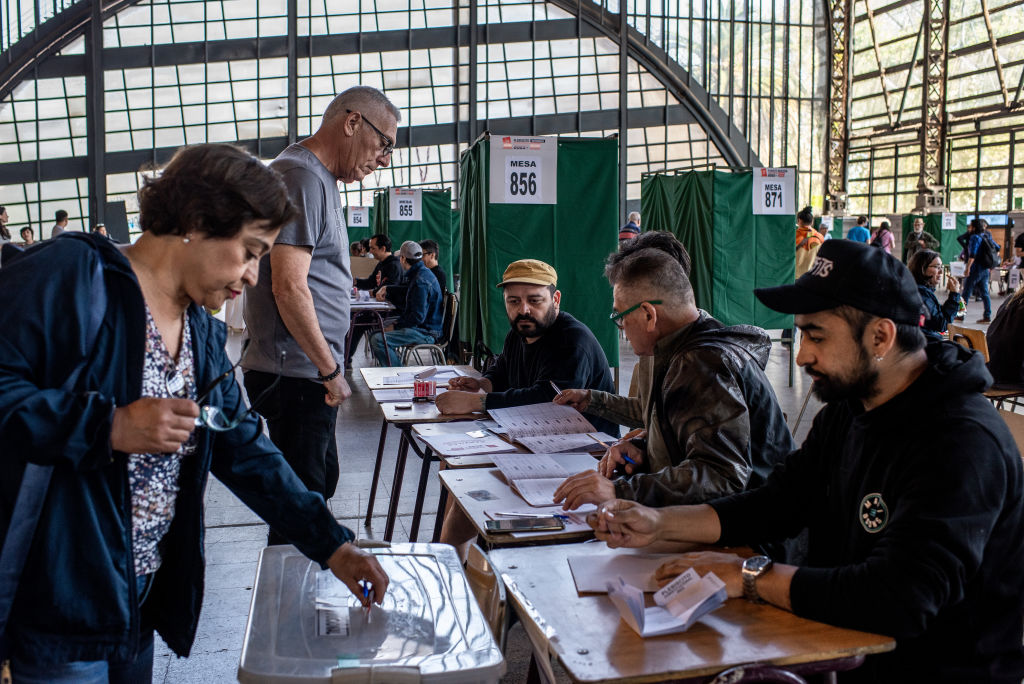
Chile is now living under Pinochet’s constitution the one 80% of people voted in 2020 to replace. The citizens are exhausted. The constitutional process is officially closed for the remainder of Boric’s term. The revolution burned itself out in two drafts.
Why Chile Failed
Chile’s failure was not a rejection of democracy. It was a rejection of documents that were too ideologically captured to reflect the actual center of gravity of Chilean society. The process produced winners and losers in the drafting room, which meant the document arrived already pre-polarized.
No mechanism existed to map real consensus to find the 70% of proposals that most Chileans could actually agree on before drafting began. Instead, each convention was a political majority writing for its base, producing a document the other half immediately mobilized against.
Taiwan: The Country That Actually Solved This
Now let’s talk about what success looks like.
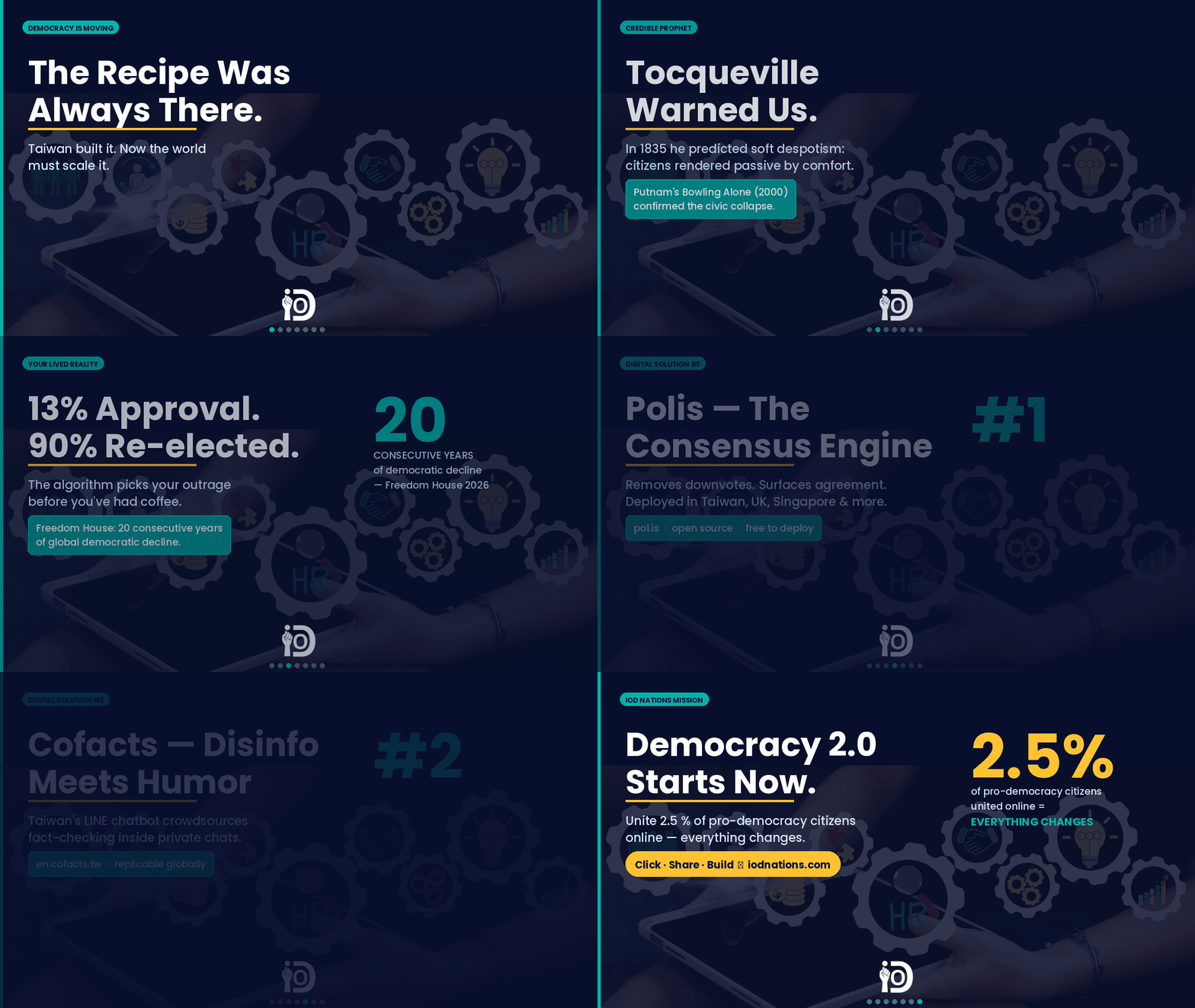
Taiwan did not arrive at digital democracy easily. The same anger that drives protests everywhere toward a government seen as captured, opaque, and unresponsive boiled over in Taiwan in March 2014, when students occupied parliament to protest a trade agreement that had been rushed through in less than a minute without proper debate. This was the Sunflower Movement. And what emerged from it was vTaiwan.
vTaiwan the “v” standing for virtual was not a Citizens’ Assembly. It was not a referendum. It was not a petition. It was a new kind of democratic architecture built from the ground up by civic hackers, open-source communities, and eventually institutionalized with direct government support.
How vTaiwan Actually Works
The platform combined digital deliberation with in-person forums. At its core was Pol.is a technology that, instead of amplifying disagreement the way Twitter and Facebook do, mapped points of convergence. Participants voted on statements made by other participants. The algorithm identified clusters of agreement the places where people who otherwise disagreed found common ground.
As Taiwan’s Digital Minister Audrey Tang described it: “People spend far more time discovering their commonalities rather than going down a rabbit hole on a particular issue. Invariably, within three weeks or four, we always find a shape where most people agree on most of the statements.”
This is the architectural breakthrough. vTaiwan was not designed to produce the loudest voices or the most extreme positions. It was engineered to surface what most people actually agree on and then build legislation from that foundation.
The Uber Test
vTaiwan’s most celebrated case study was the regulation of Uber. When Uber entered Taiwan, it created a six-year political deadlock: traditional taxi drivers, new Uber drivers, consumer advocates, and regulators all wanted incompatible things. No politician wanted to touch it.
vTaiwan facilitated a public deliberation process with over 4,000 participants. The Pol.is mapping identified the genuine overlap between groups that had seemed irreconcilably opposed. Face-to-face meetings finalized a consensus framework. The result: Uber was legalized under seven conditions that satisfied the core concerns of all major stakeholders.
Since its launch in 2015, over 80% of vTaiwan deliberations have led to decisive government action. The platform has processed 26 digital policy issues. It has since been expanded into a broader platform called Join, which has tackled drunk driving, sexual assault, child abuse, and more reaching citizens beyond the tech-savvy early adopters.
In 2023, Taiwan’s Ministry of Digital Affairs partnered with the Collective Intelligence Project to launch Alignment Assemblies citizen deliberation on AI governance, giving ordinary people a direct role in shaping how artificial intelligence develops in their society.
Why Taiwan Succeeded Where Everyone Else Failed
The difference is not cultural. It is not that Taiwanese citizens are more patient or more civic-minded. The difference is structural. Four features made vTaiwan work:
1. Government Commitment Was Built In Not Bolted On
Unlike Ireland’s Citizens’ Assemblies, which produced recommendations a government could accept, modify, or ignore, vTaiwan operated with government agencies as active participants from the start. Officials sat at the table during deliberation. Commitments to act on consensus outcomes were made before the process began. The government was not a recipient of citizen recommendations it was a co-participant bound by the results.
2. The Technology Mapped Consensus, Not Combat
Every other failed model from Iceland’s Facebook crowdsourcing to Chile’s polarized conventions funneled participation through formats that amplify disagreement. Social media rewards outrage. Assembly debates reward the most persuasive speaker. vTaiwan’s Pol.is technology “deliberately nudges participants towards greater understanding of alternative viewpoints” by showing each person what those who disagree with them actually think. The result is a map of real consensus, not a war of extremes.
3. Scale Without Exclusion
Ireland’s 99-person Citizens’ Assemblies were demographically representative but numerically tiny. Iceland’s process reached hundreds. vTaiwan and Join reached thousands, then tens of thousands. Taiwan proved that digital deliberation could maintain quality at scale that more voices could produce more clarity, not less.
4. It Was Continuous, Not Episodic
Every other model treats citizen input as an event a convention, a referendum, a one-day forum. Taiwan’s model is ongoing. vTaiwan has processed dozens of issues over a decade. The Join platform fields new proposals continuously. Citizens can initiate deliberation on any issue that crosses a participation threshold. Democracy is not something that happens every five years in Taiwan. It is a live, functioning infrastructure.
The Verdict
The evidence across four countries and a dozen more in the background points to the same diagnosis:
Democracy keeps failing not because citizens fail, but because the architecture fails them.
Citizens always show up when given a genuine opportunity. They participated in Ireland’s assemblies. They crowdsourced Iceland’s constitution. They marched in Bangladesh and Chile. They voted Yes in overwhelming numbers, in multiple countries, across multiple decades.
What failed was the mechanism for converting that participation into binding, enforceable democratic change. The moment citizen recommendations enter a parliament, they meet the gravitational pull of institutional self-interest. Without binding mechanisms without technology that maps real consensus before deliberation is hijacked by politics the people’s voice is advisory at best, and disposable at worst.
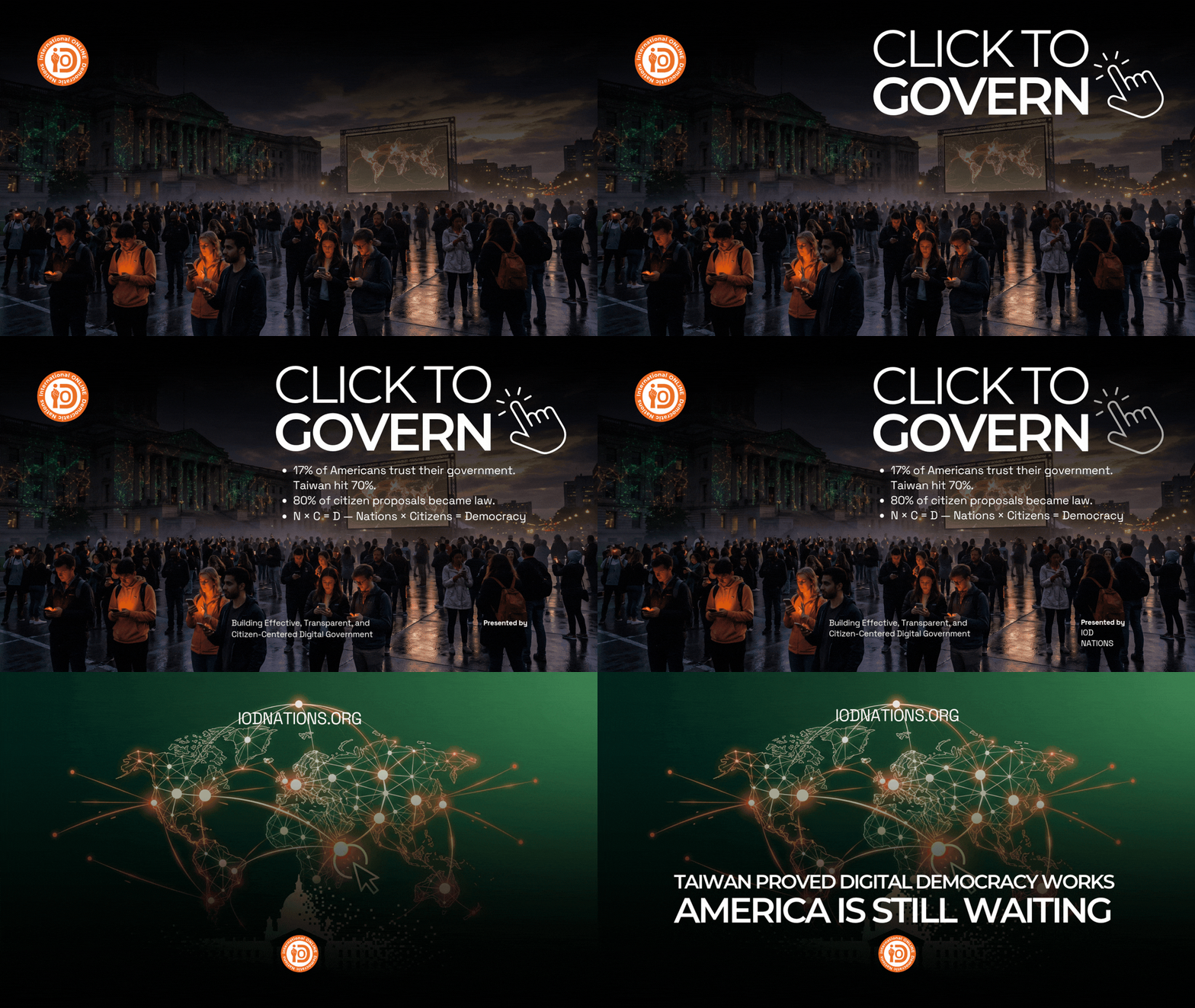
Taiwan proved the alternative exists.
The question is whether the rest of the world has the courage to build it.
That is exactly what IOD Nations is doing online, internationally, and now. The architecture for real citizen-led democracy does not require a capital city, a parliament building, or a revolution. It requires will, technology, and the refusal to accept that this is as good as democracy gets.
You see things and ask why. We dream things and ask Why Not?
What’s Next
This is Part 1 of a two-part series.
Part 2 — Coming Soon:
IOD Nations Global Vision: What If the Whole World Unites?
We will lay out the IOD Nations model in full how digital democracy works at international scale, what the N × C = D formula means in practice, and why the era of land-based nations being the only venue for democratic power is over.
If billions of us are already united online, why are we still waiting for permission from the institutions that keep failing us?
IOD Nations is building the world’s first international network of citizen-led online democratic nations. Learn more at IODNations.org. Join the movement. Reach us at hello@iodnations.org.
Watch The Shine On Video On Youtube 👇