
Architects of the Future: How to Build a Consensus Machine in a Polarized World.

— Joel Koman, Founder, IOD Nations“Democracy is never stagnant. It’s either thriving or dying.”
Our Mission
IOD Nations exists to prove one concept:
“If a business no longer requires brick and mortar, a nation no longer requires land and borders!”
We call this framework The Democratic Commons — a structure in which every ONLINE Citizen-Led Democracy, whether Cause-Based (united by shared purpose, open to the world) or Geographic (rooted in land and borders, built for continuous direct participation of current nations’ citizens), is sovereign, distinct, and self-governing. Every one of these independent democratic nations is united by a single shared purpose: to protect, expand, and improve world democracy.
Almost unlimited citizenship… One platform. Infinite entry points.
As Buckminster Fuller put it: “You never change things by fighting the existing reality. To change something, build a new model that makes the previous model obsolete. Dare to be naive. We are intended to be architects of the future, not its victims.”
Our formula to prove our concept is proven and simple: N × C = D — Number of citizens x Collaboration = Democracy.
How do we get more people to collaborate strategically and effectively… the internet, obviously! “So simple, even an ape-man gets it!”
The more sovereign, self-governing digital nations we/you build, and the more citizens who show up inside them, the stronger world democracy becomes.
Note to Readers
We are pleased to offer this article free of charge, as we believe in the importance of sharing knowledge and fostering dialogue around the establishment of citizen-led democratic nations. Any assistance, feedback, or insights you can provide would be greatly appreciated as we embark on this journey. We value your expertise and are eager to collaborate on building our first online citizen-led democratic nation.
This article draws on recent public interviews with veteran investor Jeremy Grantham, co-founder of the asset management firm GMO, and forecaster Harry Dent. We are not here to relay market predictions. We are here for something Grantham said that every American needs to hear: a confession about how the system actually treats you, and for what it proves about who must govern next.
A Confession From Inside the Machine
Jeremy Grantham has spent over five decades managing money at the highest level. In a recent interview, he described a moment from 1999 that should be taught in every civics class in America.
At an annual gathering of financial analysts, the research engine rooms of Goldman Sachs, Morgan Stanley, and JPMorgan, Grantham asked 400 self-identified full-time stock market experts two questions. First: if market valuations returned to their historical norm within ten years, would it guarantee a major decline? All 400 said yes. Second: did they think it would happen? More than 99% said it would.
Then those same firms’ public-facing representatives took the podium and told clients everything would be fine.
Grantham’s explanation is the most important sentence in the entire interview: warning the public is bad business. His own firm lost roughly half its clients by warning early before the dot-com crash proved him right. His conclusion, drawn from nearly a century of evidence, is that the major investment firms have never told the public to protect themselves at a market top. Not in 1929. Not in 2000. Not in 2008. And they never will.
He called it what it is: a betrayal of trust.
Hold that phrase. Because it is not just Wall Street’s business model. It is the operating system of every institution that governs your life without your participation.
The Trust Collapse Is Now Measurable, and It Is Rational
Americans have done the math on this betrayal, and the numbers are historic:
Just 17% of Americans trust the federal government to do what is right most of the time, per Pew Research Center. That is near the lowest reading since the question was first asked in 1958, when it stood at 73%
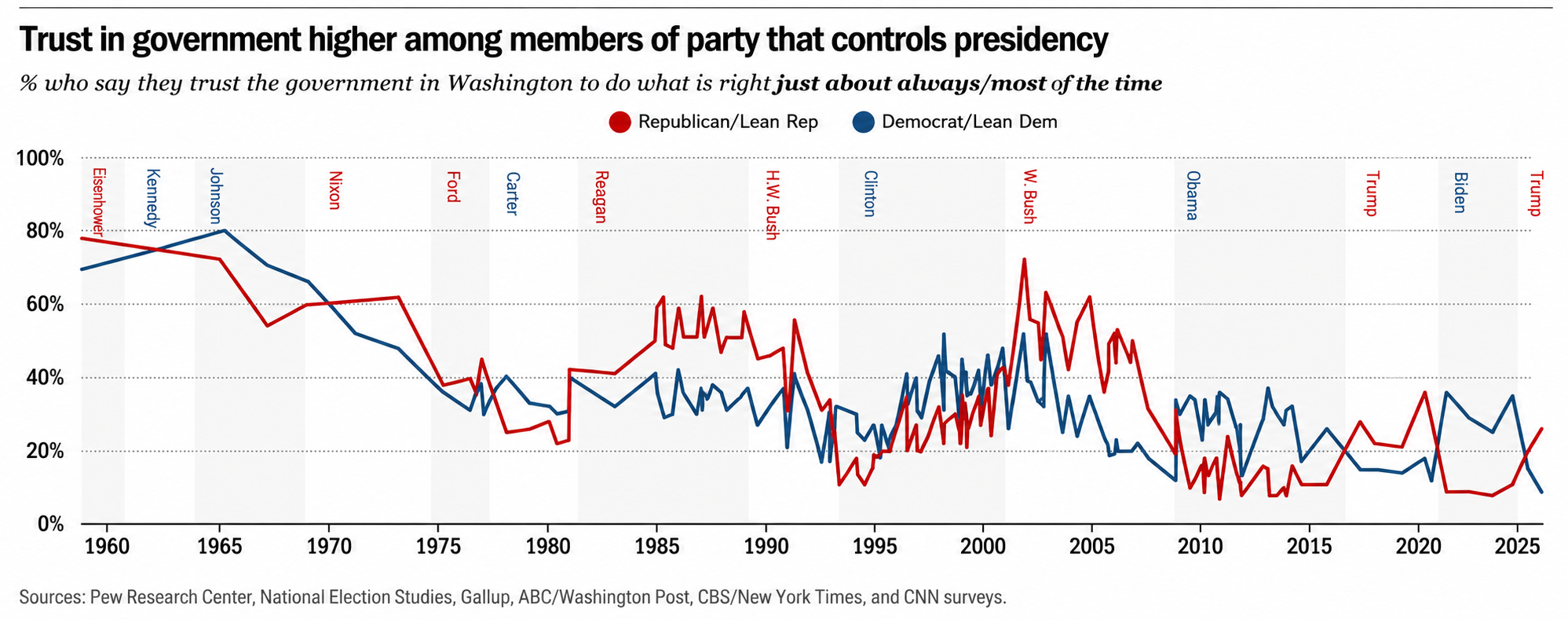
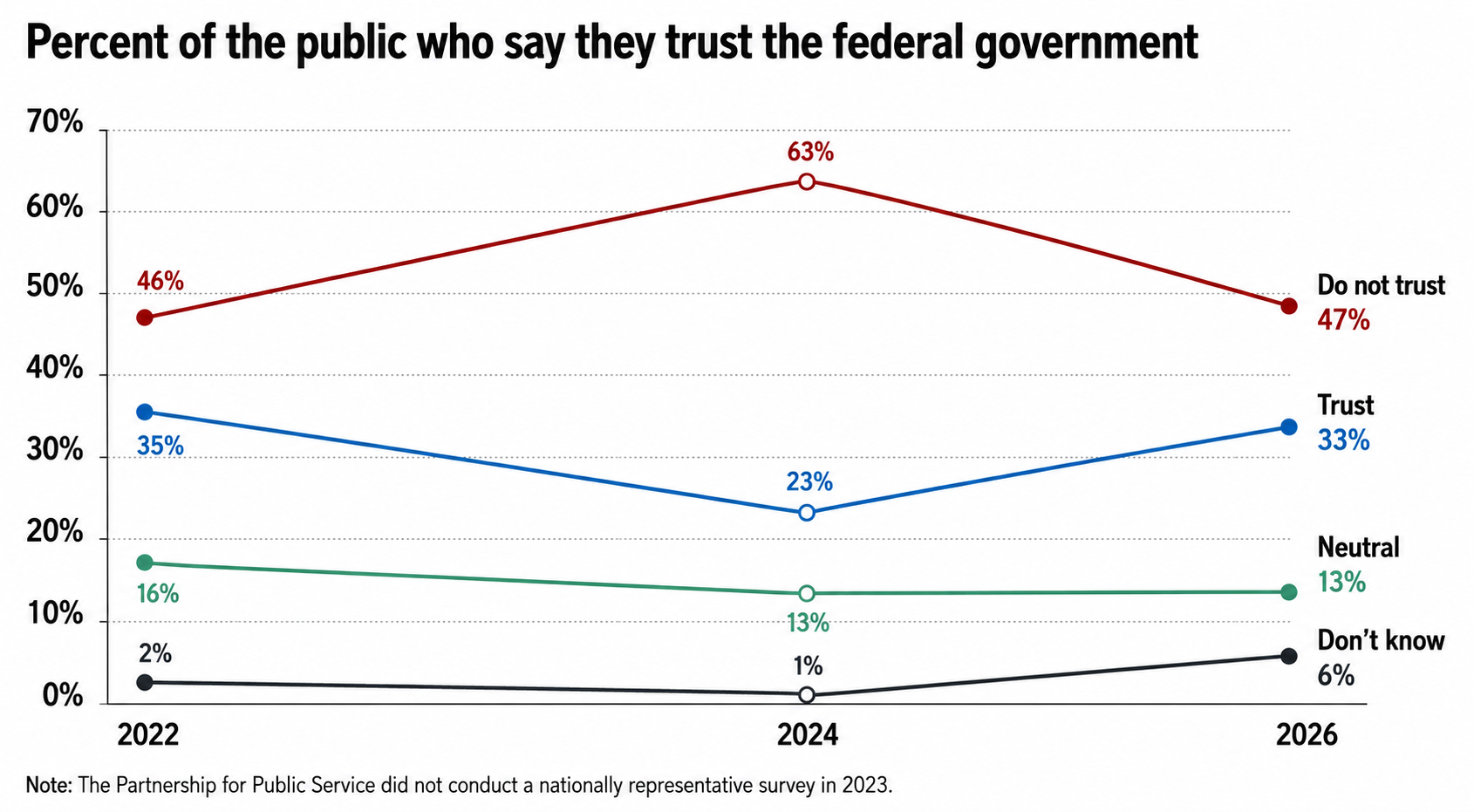
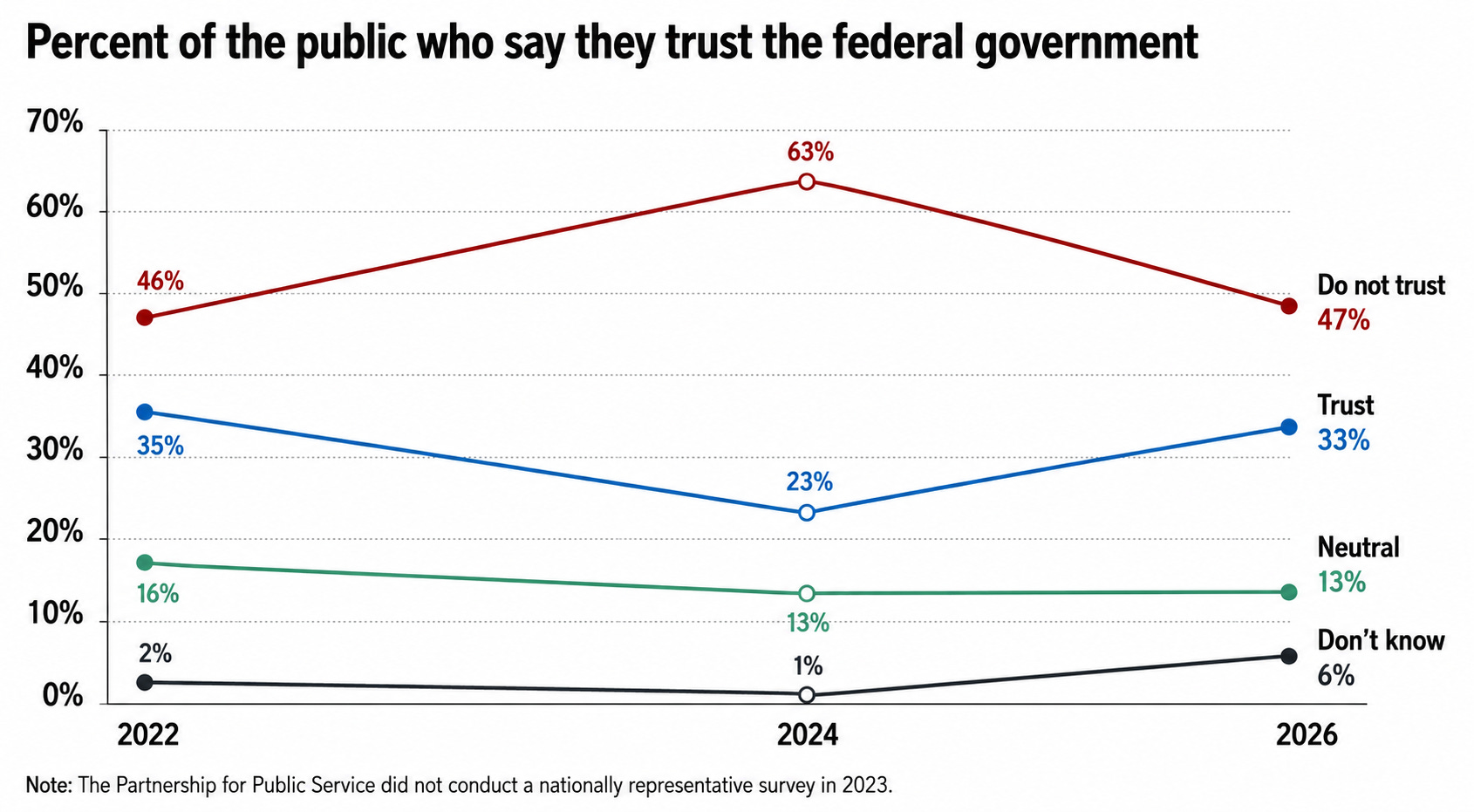
Only one in three Americans trust the federal government to do what’s right, per the Partnership for Public Service’s 2025 survey
Globally, freedom has declined for 20 consecutive years, according to Freedom House’s Freedom in the World 2026 report. Just 21% of the world’s people now live in countries rated Free, down from 46% two decades ago.
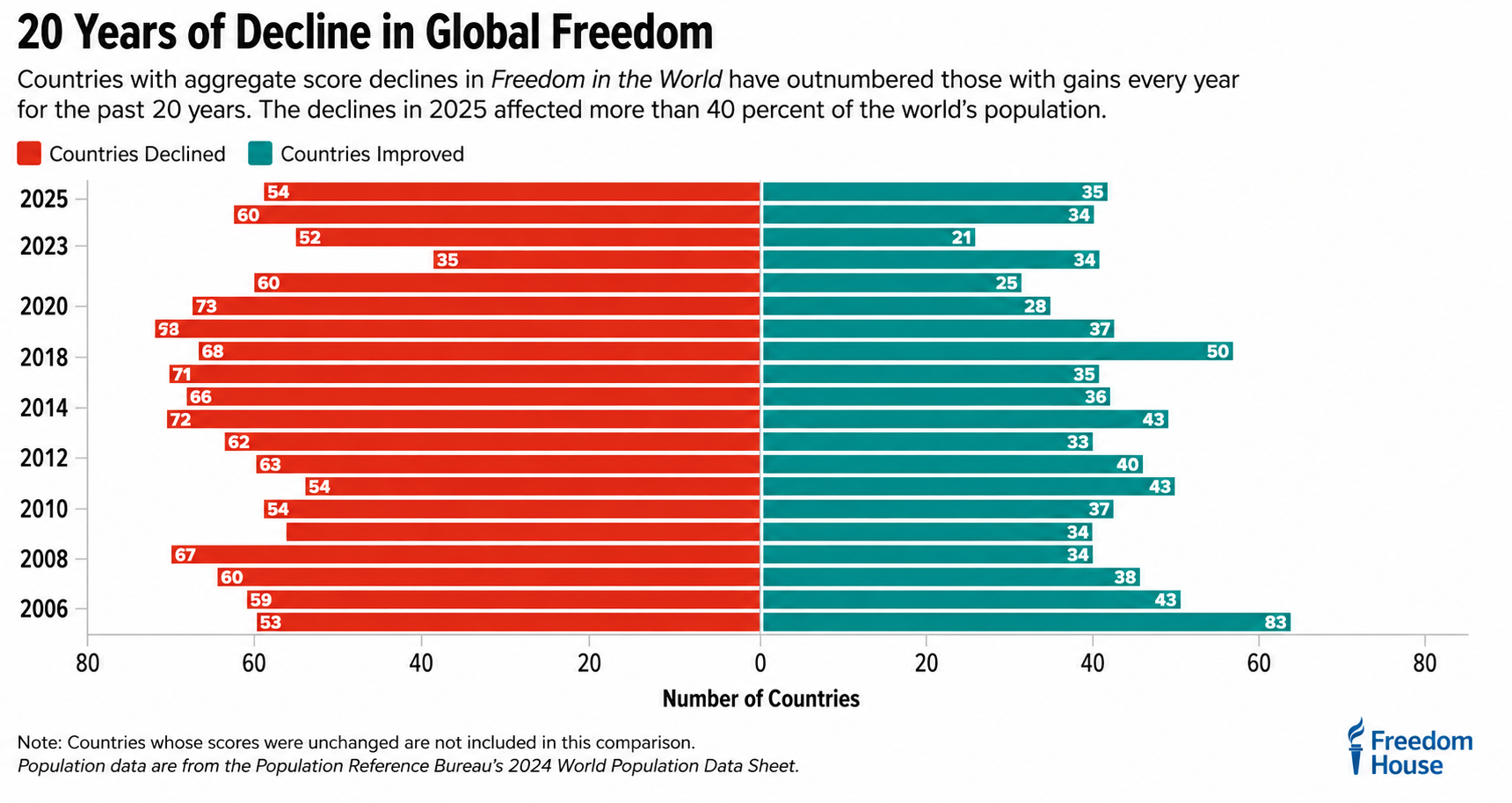
The United States has lost 12 points over twenty years on Freedom House’s 100-point scale, the largest decline of any free nation.
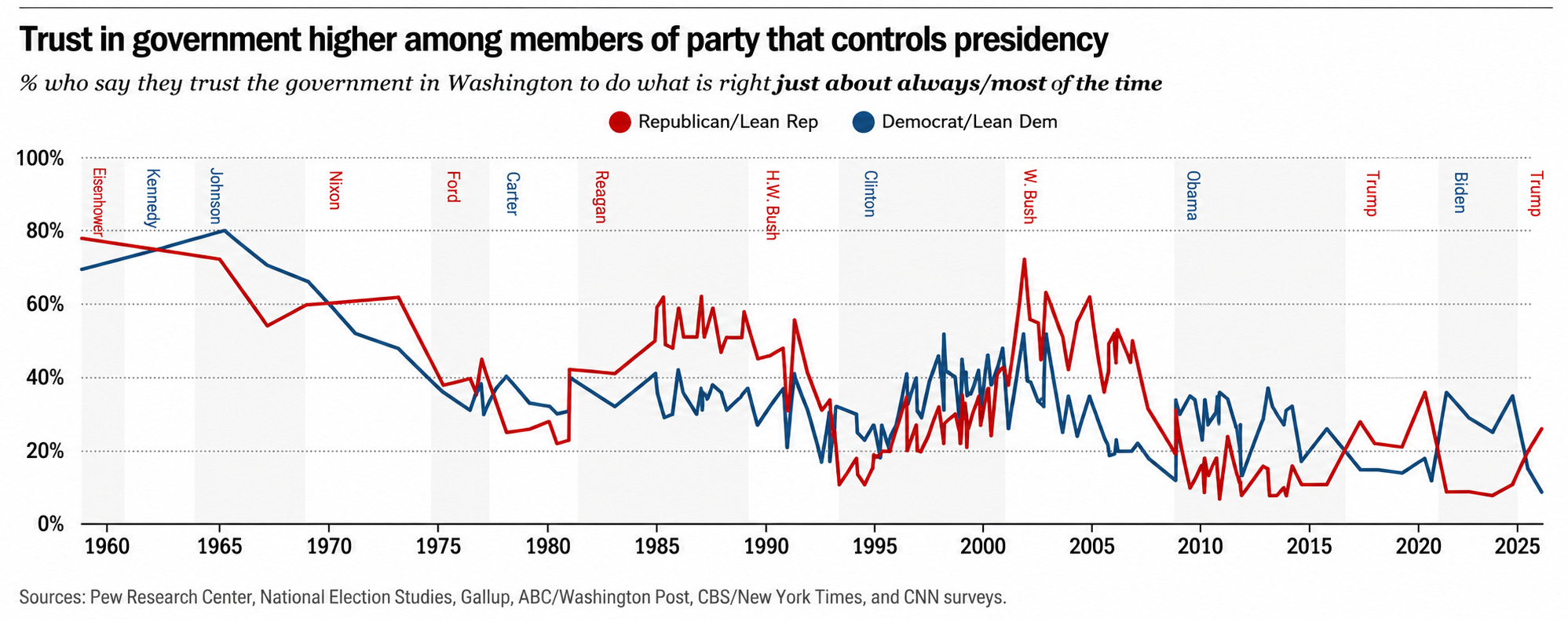
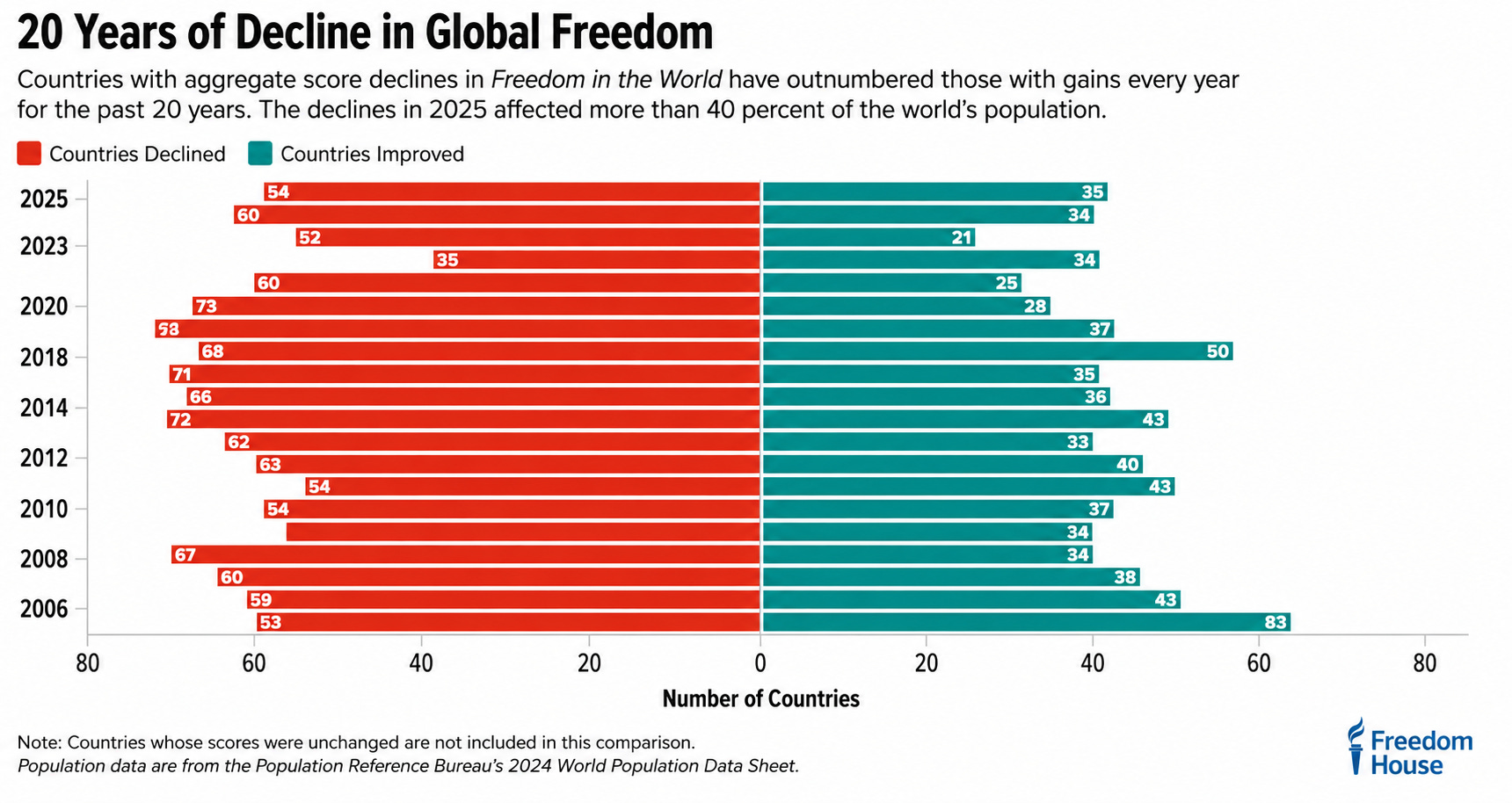
Commentators call this collapse “cynicism.” It isn’t. It is pattern recognition. Citizens have correctly identified that the institutions claiming to serve them are structurally incentivized not to, and that they have no continuous mechanism to do anything about it between elections… or rather, that fake message about the lack of a mechanism is a lie, THE MECHANISM IS AVAILABLE AT THE TAP OF YOUR SCREENS!
Your Lived Reality: Priced Out by Decisions You Never Made
The clearest place Americans feel this is housing.
Grantham lays out the arithmetic. In 1994, a typical home cost about 3.4 times family income, roughly where it had sat for half a century. Today, depending on where you live, that multiple has soared far beyond it, and in the U.S. the median home price sits near record highs while wages lag. His verdict on what that means for a young couple: they are “in big trouble. They can’t really afford to buy a house.” And because high prices flow through to rents, renters get squeezed by the exact same force with none of the upside.
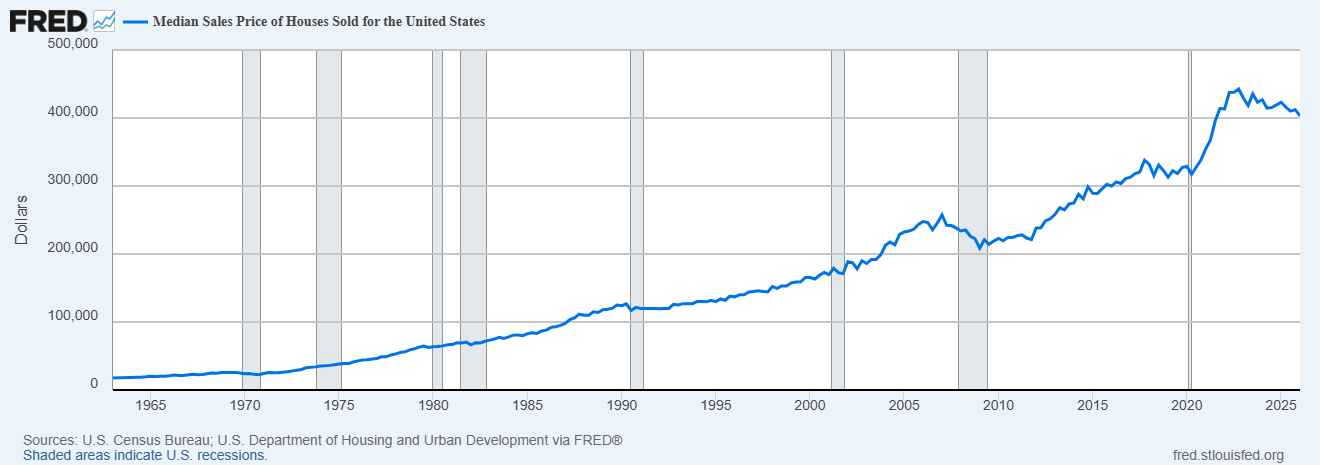
Grantham is explicit about the cause: this situation was engineered. Policy choices on interest rates, lending rules, stimulus, and zoning made house prices rise decade after decade. Great for those who already owned. Devastating for everyone trying to start. He notes the same engineered squeeze across Canada, Australia, China, and most of Europe.
Now name the process. Which of those policy choices did you deliberate on? Which trillion-dollar decision came to you for input? Both interviews cite the scale of government intervention in markets since 2008. Dent puts the combined stimulus and money creation at roughly $31 trillion, one and a half times a year’s GDP. Whatever the precise figure, the constitutional reality is undisputed: decisions of civilization-shaping scale were made by a handful of appointed officials, and 330 million Americans experienced them as weather.
That is the democracy deficit. Not a metaphor. A measurable gap between who decides and who pays.
The Incentive Problem No Election Can Fix
Here is the hard truth the Grantham story teaches: you cannot vote your way out of a misaligned incentive structure that operates between elections.
Please repeat this:
“You cannot vote your way out of a misaligned incentive structure that operates between elections!”
The analysts knew. Their employers stayed silent. Not because they were evil, and Grantham says he sympathizes with them, but because the structure punished honesty and rewarded silence. The same structural logic runs through Washington. Officials answer to donors, lobbies, and news cycles continuously, and to voters only in brief, binary, once-every-few-years moments. Between those moments, the public has no seat at the table, which is precisely when everything important happens.
A system where honesty is bad business will produce dishonesty at scale, forever, no matter which party wins. The fix is not better for insiders. The fix is removing the wall between citizens and decisions.
The Proven Alternative: Continuous Citizen-Led Digital Democracy
This is not utopian. It is operational, and it has a track record.
Taiwan built vTaiwan, a national digital deliberation process running on the open-source platform Pol.is, where thousands of citizens surface consensus on contested issues such as ride-sharing rules, online alcohol sales, and fintech regulation before legislation is drafted. Under Taiwan’s first digital minister, Audrey Tang, the process made government radically transparent and made citizen input continuous rather than quadrennial. The polarization machine became a consensus machine.
Run the counterfactual. In a system of continuous, transparent citizen deliberation:
Could analysts’ near-unanimous private warnings be hidden from the public for years? No. Transparency is the default, not a leak.
Could trillions be allocated with zero citizen deliberation? No. Deliberation is the pipeline every major decision flows through.
Could housing policy quietly transfer wealth from the young to the entrenched for thirty years? No. The people being priced out would be in the room, permanently.
This is why IOD Nations exists. The Democratic Commons, a growing network of sovereign, self-governing ONLINE Citizen-Led Democracies, Cause-Based and Geographic.
This is the new model Buckminster Fuller pronounced: not fighting the old institutions, but making them obsolete by building governance where trust is structural, because participation is continuous and every decision is visible.
Seventeen percent trust is not a public-relations problem. It is a design verdict. The old design failed. We are building the new one.
What to Do With Your Trust and Your Resources Right Now
We are a democracy movement, not a brokerage. Nothing here is financial advice, and every household’s situation differs. (WHAT INTERVIEWS) But both interviews contain practical wisdom worth reporting, and it starts with a single principle: stop outsourcing your judgment to institutions whose incentives oppose yours.
What the veteran investors themselves recommend:
Diversify and think independently. Grantham’s first rule: hold wholesome bonds, wholesome cash, and perhaps a small allocation to precious metals, and never expect the big firms to warn you of anything. Their silence is structural.
Know your direct options. Americans can lend directly to the U.S. government with no broker and no commissions at TreasuryDirect.gov, buying Treasury bills, notes, and bonds at face value. Corporate bonds are available through the fixed-income section of major brokerages. Understanding these tools is financial literacy no institution is incentivized to teach you.
Look beyond U.S. assets. Grantham points out that non-U.S. equities are meaningfully cheaper than American stocks and have outperformed since the start of last year. Broad international index funds are the vehicle he describes.
Build in conservatism early. His advice to founders applies to families: secure resources while conditions allow, and brace before you need to. In his words, “a pretty good principle anytime.”
What we recommend: invest where your trust is actually earned.
Every dollar decision above is defensive. Only one investment is constructive: building the governance infrastructure where the betrayal-of-trust business model cannot survive.
Become a citizen of an IOD Nation. Join the Democratic Commons and practice continuous, transparent, citizen-led governance, the model Taiwan has already proven at national scale.
Bring your skills to the build. Writers, developers, organizers, teachers, veterans, students, economists: there is a sovereign IOD Nation for your cause, and it is being built now, while it can still be built calmly.
Show up live. The IOD Nations weekly live show runs every Wednesday at 11 AM PST. Join on Zoom and take part directly.
Four hundred experts knew the truth, and their institutions said nothing. Seventeen percent of Americans still trust the result. Freedom has fallen for twenty straight years while citizens watched from the sidelines they were assigned.
The sidelines are optional. Democracy is never stagnant. It’s either thriving or dying. Come build the version that thrives.
Take Action
Explore the movement: iodnations.org
Start participating today: iodnations.org/civic-action
Contact us: hello@iodnations.org